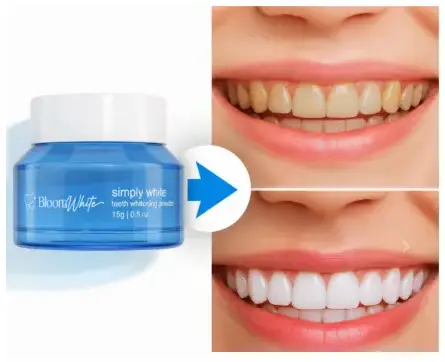
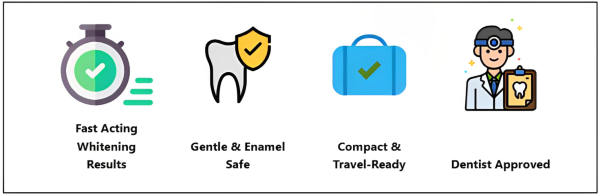
Bloom White Whitening Powder supports tooth surface cleaning. It helps reduce visible stains from food, drinks, and daily oral exposure during brushing.
“My teeth looked cleaner within two weeks, and coffee stains reduced clearly” — Sarah Mitchell, 32, Los Angeles, USA

Official Website:  Click Here
What is Bloom White Whitening Powder?
Bloom White Whitening Powder is a dental whitening powder used in daily oral care routines. It sits on the tooth surface during brushing and interacts with surface layers that collect stains from food and drinks.
It serves as an add-on step to standard toothbrushing. Users place a small amount on a toothbrush and brush their teeth in a slow, even motion. The process focuses on direct contact with tooth surfaces.
Dental specialists often recommend checking oral health before adding whitening powders to a routine.
People with sensitivity or gum issues may need dental advice before use. A dentist can confirm if this type of oral care step fits a person’s needs and long-term dental plan.
The Science Behind Bloom White Whitening Powder
Bloom White Whitening Powder works by interacting directly with tooth surfaces during brushing. The powder creates a layer on the enamel that loosens substances and residues that accumulate from food, drinks, and daily oral activity.
When applied to a toothbrush and gently brushed across the teeth, the powder engages with the surface layers of enamel.
Its structure allows it to reach crevices and areas that a toothbrush alone may not fully contact. The brushing motion ensures that every tooth surface is evenly exposed to the powder.
Dental experts note that using whitening powders should be part of a regular oral care routine. People with sensitive teeth or gum concerns should consult a dentist before adding this step.
Bloom White Whitening Powder Ingredients – What’s Inside?
Bloom White Whitening Powder contains a mix of whitening agents, minerals, and cleaning compounds. Each ingredient plays a specific role in tooth surface cleaning, stain control, and enamel support during brushing.
PAP+ (Phthalimidoperoxycaproic Acid)
PAP+ acts as an oxidation-based whitening agent. It targets colored stains on the tooth surface. It breaks down stain molecules during brushing.
It does not depend on harsh bleaching reactions. It supports surface-level whitening without a strong chemical burn.
Carbamide Peroxide
Carbamide Peroxide releases hydrogen peroxide during use. It reaches the surface and stains the shallow enamel. It helps reduce yellow tones caused by food and drinks.
It works through controlled oxygen release during contact with teeth.
Titanium Dioxide
Titanium Dioxide works as a whitening optical agent. It reflects light from the tooth surface. It creates a brighter appearance after brushing. It does not change the enamel structure but improves visual brightness.
Silica
Silica acts as a gentle abrasive. It helps remove surface stains through physical brushing. It polishes the tooth surface. It supports a smoother enamel feel after cleaning.
Sodium Bicarbonate
Sodium Bicarbonate helps lift surface stains. It balances oral pH during brushing. It supports removal of plaque buildup. It also helps reduce odor-causing compounds in the mouth.
Hydroxyapatite
Hydroxyapatite supports enamel surface repair. It matches the natural mineral structure of teeth. It helps fill micro-gaps in enamel. It strengthens surface smoothness during daily use.
Kaolin Clay
Kaolin Clay absorbs surface debris during brushing. It binds to impurities and lifts them away. It provides mild polishing action. It leaves tooth surfaces cleaner after rinsing.
Microcrystalline Hydroxyapatite
Microcrystalline Hydroxyapatite targets fine enamel irregularities. It deposits small mineral particles on tooth surfaces. It helps improve surface uniformity. It supports a smoother and brighter enamel finish over time.